
.png)
What do you do when feedback lands with a resounding thud?
Whether it's intended for a coworker, a friend or even a loved one, feedback is sometimes met with stiff resistance. We may have checked all the right boxes — clear message, timely delivery, concrete examples — and yet, somehow, our feedback fails to bring about the desired result.
There's a sneaky reason your feedback is falling flat.
The reason is "you."
Not you personally — the use of the word you.
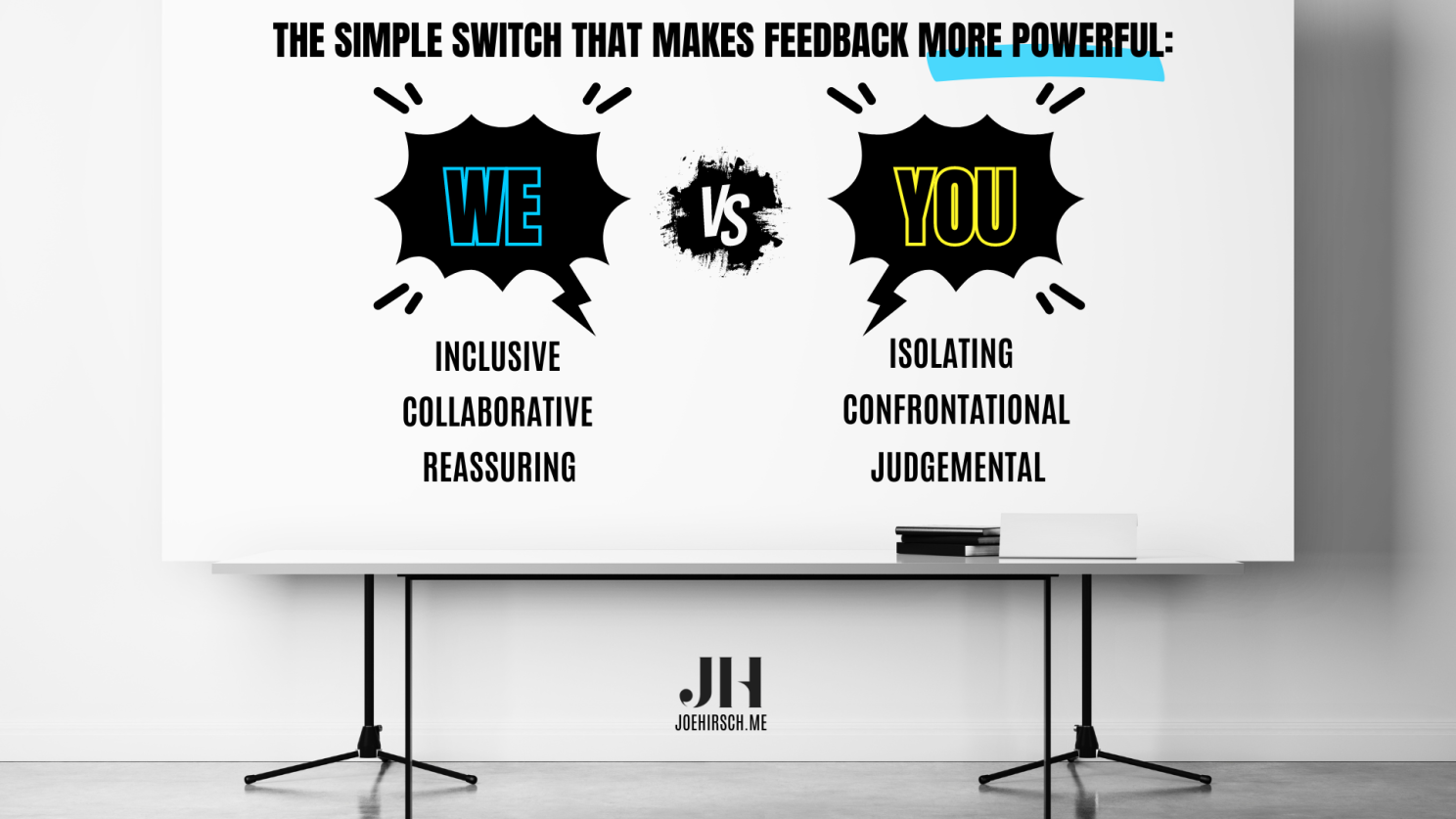
Across five studies of people who engaged in heated debate, researchers found that messages containing “you” pronouns were less likely to be received than messages containing “we” pronouns. Their conclusion: When conditions are fraught, using “you” statements can feel accusatory and aggressive, while "we" statements seem more open and encouraging.
If feedback is falling flat, it might be a flaw in the framing, not the message itself.
Why "we" works better
Making this small shift from "you" to "we" can be a feedback game-changer. Here's how:
1. It creates a sense of teamwork and shared responsibility
"We” statements make feedback a joint effort. This sharing of responsibility avoids the blame and shame that typically comes with corrective feedback, and counters the impulse to dismiss unwelcomed news. People are more willing to act on feedback when they feel like a partner, not a target.
2. It turns feedback into a conversation
"We" statements are a bridge to dialogue. They create a back and forth exchange about what's happening, where it's happening, and what should happen next. Rather than issue a judgement ("You didn't deliver the product on time"), "we" statements focus on inquiry, prompting both sides to explore the conditions and factors that may be at play.
3. It is affirming and actionable
"We" statements affirm the relationship between giver and receiver, which is a core feature of successful feedback. (I've said it again and again: Feedback is about a relationship, not a rating or report.) It conveys the sentiment that we're in this together. And by framing feedback as a shared opportunity, "we" statements also lead to clear next steps, with each side committing to tackle the issues that fall within their ability to change or control.
Putting "we" to work
How can we begin to apply this shift in our everyday conversations at work and beyond? I think the following three practices and conversation stems can help us get going.
Start with a shared observation:
- We’ve both noticed…”
- “Lately, we’ve seen…”
- “We seem to be…”
Name a shared goal or issue:
- “This has made it tricky to…”
- “This is keeping us from…”
- “It feels like we’re missing…”
Suggest a joint next step:
- "Let’s figure out how we can…”
- “Maybe we could try…”
- “What do you think about…”
If feedback is something that's shared between two people, shouldn't we be in it together?
.png)
.png)
.png)
